Packed-lunch decision guide
Is a Reusable Snack Bag Worth It for Packed Lunches?
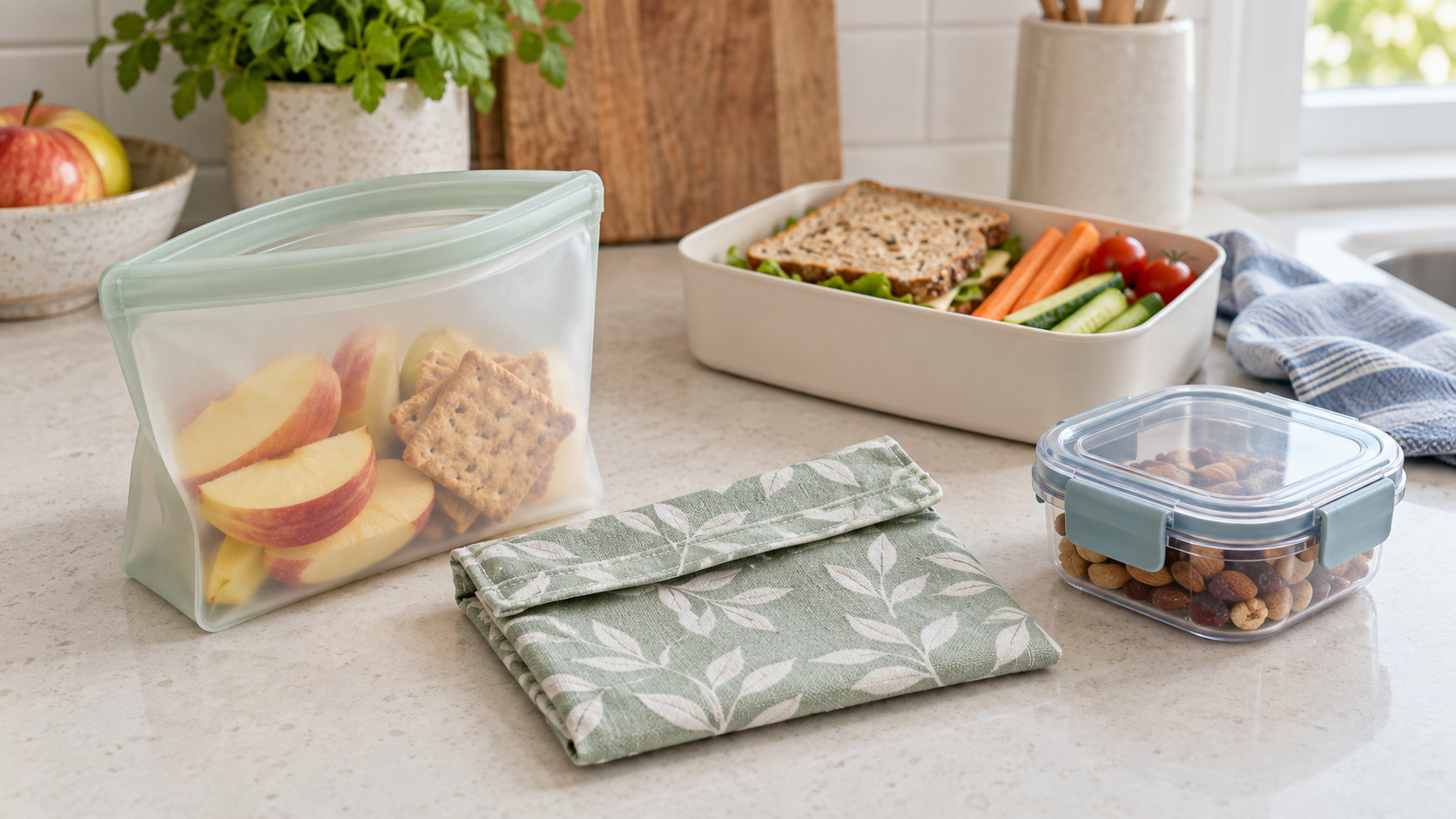
A reusable snack bag can replace repeat single-use bags when you pack the right foods often enough and will actually wash and dry it. It is less convincing when crumbs hide in seams, damp bags sit folded, or the food needs rigid protection.
As an Amazon Associate, GoodWeighFinds earns from qualifying purchases.
Category route
Compare reusable snack bags by the job
Check dimensions, closure, seams, maker care directions, drying position, and stated temperature or appliance limits. This category route is not a ranked product list.
Short answer: worth it for a repeated, dry-food job
A reusable snack bag is most likely to earn its place when you pack dry or low-mess items several times a week, the filled bag fits the lunch bag, and you have an easy way to wash it and leave it fully open to dry. It can flatten for storage and fill awkward gaps around larger containers.
It is probably not worth buying when you already own small containers that fit, carry crush-prone food, need confident liquid containment, or dislike cleaning corners and closures. A reusable label does not prove leak resistance, freshness, food safety, or suitability for a dishwasher, freezer, or microwave; those are separate claims to verify in the maker's current instructions.
Run a one-week no-buy test
- Count the occasions: Note how many packed lunches actually need a small separate compartment.
- Name the foods: Separate dry snacks from oily, wet, staining, strongly scented, or easily crushed foods.
- Measure the space: Check the lunch bag opening and the gap left after the main container and cold pack are loaded.
- Test an alternative: Use a small container you own for a week. Notice whether bulk or weight is the real problem.
- Audit washing: Identify where a bag can stay propped open until the seams and closure are dry.
If the need appears once or twice, current containers may be enough. If the same flexible-space problem appears most workdays, a reusable bag has a clearer job.
Features that matter before buying
- Usable dimensions: Compare the interior below the closure, not only the outside measurements. A wide base helps some bags stand but takes more room.
- Closure: Check whether the zipper or press seal is easy to align and whether the maker limits it to certain contents. Do not infer leakproof performance from a product photo.
- Interior access: Rounded corners and a wide opening are easier to inspect than narrow gussets or deep seams.
- Care directions: Verify hand-wash or dishwasher instructions, rack position, and temperature limits from the maker. “Reusable” alone says nothing about appliance compatibility.
- Drying: A bag that collapses shut while damp may add more friction than it removes. Include a drying rack or open-air spot in the decision.
- Material information: Look for clear material labeling and intended-use guidance. Avoid turning vague “eco,” “non-toxic,” or “food-safe” marketing into broader safety conclusions.
- Seller terms: Read the current quantity, included sizes, return terms, and replacement policy. Do not rely on old prices or review counts.
Reusable bag or rigid container?
Choose by failure mode. A flexible bag is useful when empty storage and fitting around other lunch items matter most. A rigid container is usually the better format when crackers, berries, or other delicate food needs crush protection, or when the container needs to stack predictably.
For foods with liquid, oily dressing, or a spill that would damage work items, use a container whose maker expressly supports that use and test the closure at home. Neither “zip top” nor “locking” makes a universal no-leak guarantee. For a broader format comparison, read bento box versus sandwich box for work lunches.
Cleaning is the real ownership cost
The purchase only saves effort if the wash cycle fits your day. Open the bag as directed, remove crumbs from corners, follow the maker's cleaning instructions, and let every layer dry before storage. Retire a bag when a closure no longer works, seams separate, the interior cannot be cleaned, or the maker's replacement guidance says to stop using it.
A rotation of several bags can reduce pressure to reuse one before it is dry, but buying a large set before testing the format creates its own clutter. Start with the smallest quantity that can prove the routine.
Skip it when
- Your existing small containers already fit the lunch and wash cycle.
- You mainly pack foods that are easily crushed or need rigid separation.
- You need a liquid-tight result that the maker does not clearly claim for the intended use.
- The bag's seams, lining, or closure are difficult for you to open, inspect, wash, or dry.
- The appeal depends on portion-control or weight-loss claims rather than a practical packing problem.
Bottom line
A reusable snack bag is worth considering when it solves a frequent flexible-storage problem and its care routine is realistic. Measure first, test a container you own, and buy a small quantity only if the bag format clearly reduces friction. For detailed format criteria, continue to the reusable snack-bag buying guide, then use the routine-support tools pillar to keep the decision focused on function rather than body-result promises.