Dedicated holder, existing cup, or drawer
Is a Sink Caddy Worth It for Bottle-Cleaning Tools?
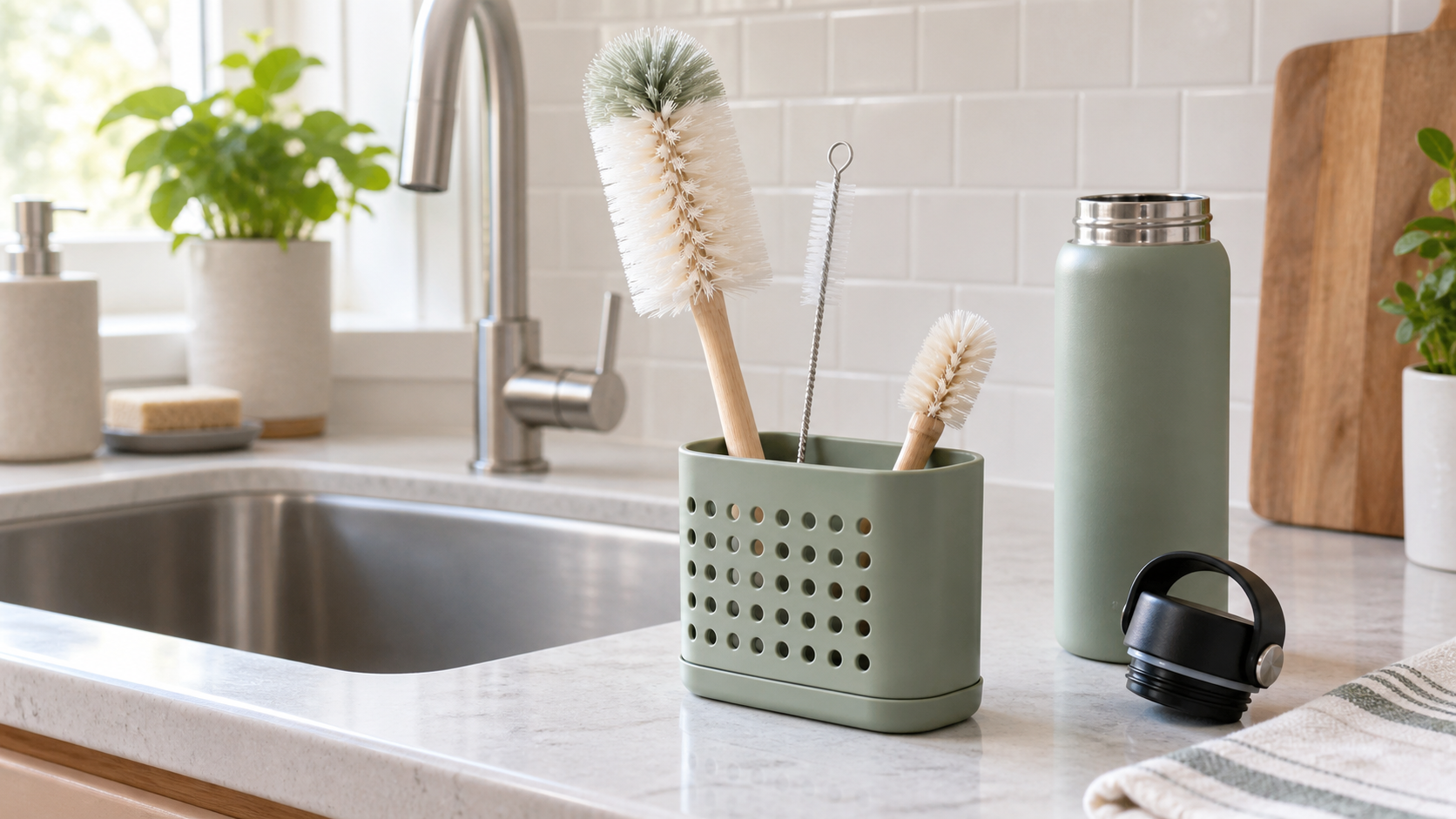
A sink caddy can be worth buying when several bottle, straw, lid, and gasket brushes are used often and repeatedly end up scattered or sitting in pooled water. It is probably unnecessary when one or two tools already dry well in a clean cup, on a hook, or in a drawer after drying.
As an Amazon Associate, GoodWeighFinds earns from qualifying purchases.
The quick answer
- Likely worth it: three or more frequently used tools need an upright home, the measured caddy fits beside the sink, and its drainage and cleaning routine are clear.
- Test first: place the dry tools in a washable cup or divided container you already own for a week, then note crowding, tipping, trapped water, and cleanup.
- Probably skip it: the brushes are rarely used, a hook or drawer works after drying, counter space is scarce, or the caddy creates another awkward item to scrub.
Count the tools before measuring the caddy
Lay out only the tools used in a normal week: the bottle-body brush, straw brush, small detail brush, gasket pick, scraper, or sponge. Do not size the purchase around spare or abandoned tools. Measure the tallest handle, widest brush head, and combined handle thickness so narrow dividers do not force damp tools together.
A tall bottle brush can make a light holder tip when removed from one side. Compare the loaded arrangement, not an empty product photo, and keep brush heads from resting on the counter or blocking the faucet controls.
Trace where water actually goes
Vent holes do not automatically create a good drainage path. Check whether water exits into the sink, collects in a removable tray, or can pool beneath a fixed insert. A tray is useful only if it is easy to remove, empty, inspect, wash, and dry.
A caddy should not be treated as proof of sanitation or mold prevention. Brushes still need the cleaning and replacement routine appropriate to their materials and use, and the holder itself needs regular attention. Follow the maker's care directions for the exact model rather than assuming every part is dishwasher safe.
Measure the working sink zone
- Footprint: mark the listed width and depth with paper or tape beside the sink.
- Height: include the tallest loaded brush and check shelves, windowsills, and faucet movement above it.
- Reach: make sure tools can be lifted out without catching an upper cabinet or dripping across the counter.
- Stability: look for a broad base and a layout that stays balanced as one tool is removed.
- Drainage destination: confirm the outlet or tray will not send water behind the faucet or onto a vulnerable seam.
Compare the no-buy alternatives
- Washable cup or jar: a useful trial for a small tool set, provided it is stable and routinely emptied, washed, and dried.
- Existing divided holder: separates narrow straw brushes from larger handles without adding a specialized product.
- Hook or rail: keeps loop-handled tools off the counter when the mounting method is permitted and the drip path works.
- Drawer after drying: clears the counter when the brushes can dry fully elsewhere first.
- Dish rack: may already have a suitable upright section, though it should not crowd dishes or hide small brushes.
When a caddy becomes more work
Skip designs with inaccessible seams, fixed layers that hide pooled water, compartments too narrow for the real handles, or a footprint that blocks normal sink tasks. Suction-mounted holders are a separate format decision because attachment surface, loaded hold, removal, and wall clearance matter; do not assume they save useful space in every sink.
If brush selection is still unresolved, use the bottle-cleaning brush guide first. If the actual problem is where washed bottles, lids, and seals dry, decide whether a bottle drying rack earns its counter space instead.
Bottom line
A sink caddy earns its space when a measured, frequently used brush set fits without crowding, the loaded holder stays stable, water has an obvious destination, and every surface can be cleaned and dried. Test an existing holder first. For the wider buy-or-skip framework, use the routine-support tools guide.