GoodWeighFinds is for general information only and is not medical advice. Readers should talk with a qualified healthcare professional before starting weight-loss products, supplements, diets, or exercise changes.
Buying guide
Best Food Storage Labels for Meal Prep and Leftover Tracking
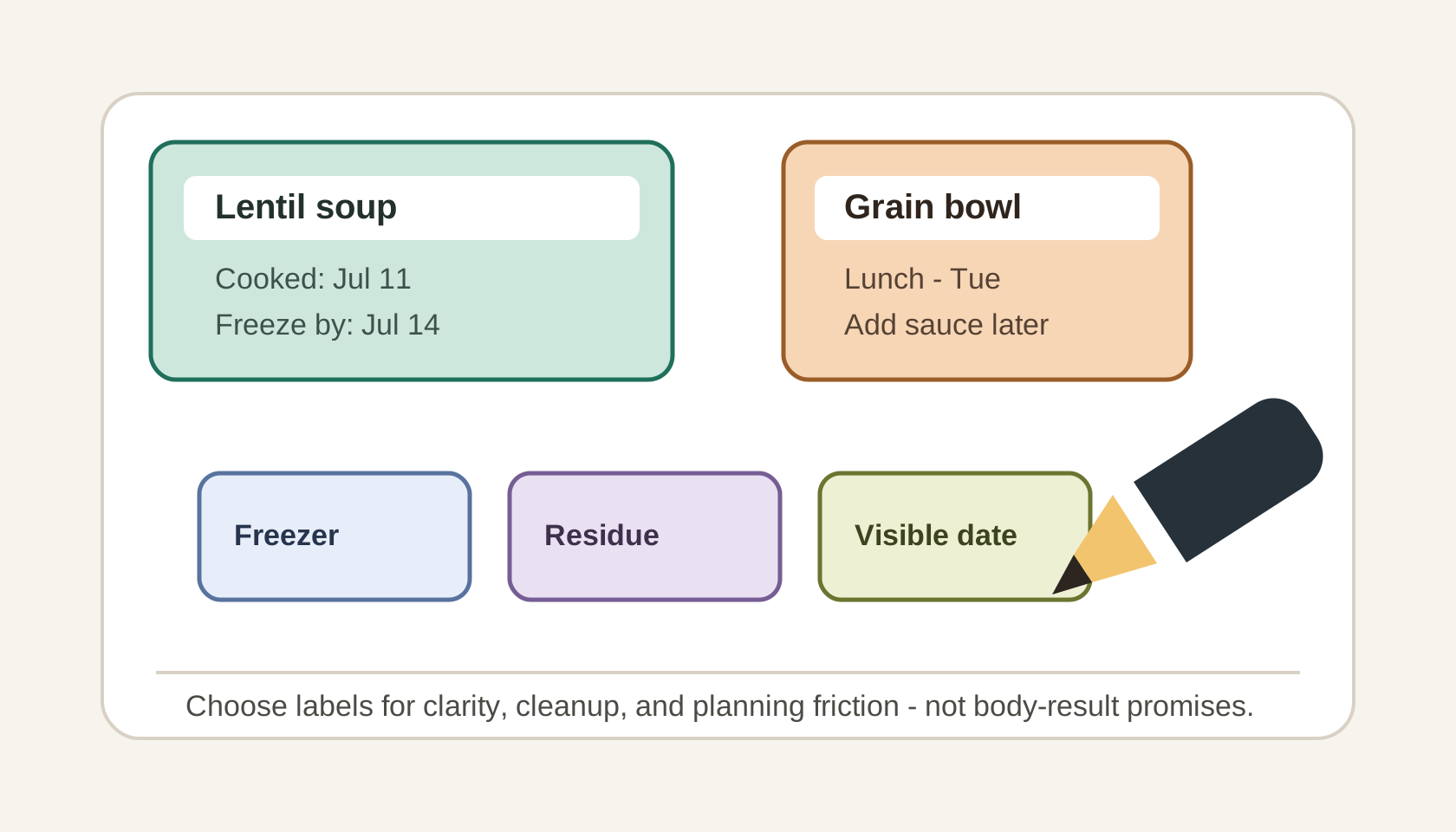
Food storage labels can make meal prep and leftovers easier to manage. They do not cause weight loss, make a meal plan medically appropriate, or prove that a portion size is right for you. Their job is simpler: make dates, contents, and freezer notes easy to see before food gets forgotten.
Who this guide is for
This guide is for adults who batch cook, pack leftovers, freeze meals, or share refrigerator space and want a low-pressure way to track what is inside each container. It is a practical routine-support category, not a diet rule system.
If you are comparing broader routine helpers, start with the routine-support tools guide. If the container itself is the harder decision, the meal prep container guide covers material, lid, and storage tradeoffs.
Best fit categories, not product rankings
GoodWeighFinds has not tested specific labels hands-on for this page, and this is not a ranked review list. Use these best-fit categories to compare product listings without relying on fake precision, unverified reviews, or weight-loss promises.
- Best for freezer batches: Labels that stay readable in cold storage and leave space for contents, date, and reheating notes.
- Best for reusable containers: Removable or erasable labels that do not leave stubborn residue on glass, plastic, or stainless steel.
- Best for busy refrigerators: Large, high-contrast labels that can be read quickly without pulling every container out.
- Best for shared kitchens: Color-coded or name-friendly labels that reduce confusion without turning food into a judgment system.
- Best for low waste: Reusable label sets or washable markers, as long as they still clean off reliably and remain legible.
Selection criteria that actually matter
A label looks minor until it peels off in the freezer, smears after one wipe, or leaves adhesive on a favorite container. Before buying, compare the practical friction points instead of the most polished product photo.
- Surface compatibility: Check whether the label is meant for plastic, glass, metal, freezer bags, lids, or all of the above.
- Cold and moisture claims: Treat "freezer safe" and "water resistant" as listing claims to verify against the product details and your use case.
- Residue behavior: Removable labels should come off without scraping, soaking, or damaging reusable containers.
- Marker compatibility: Some labels need permanent markers, some need chalk markers, and some erase only with a damp cloth or specific cleaner.
- Readability: A label should fit real words, dates, and notes in handwriting large enough to read quickly.
- Cost per use: Disposable labels may be convenient; reusable labels may cost more up front but reduce repeat purchases if they hold up.
Comparison framework
Use a simple scorecard before buying. The best label is the one that makes your actual storage routine easier without adding shame, clutter, or cleanup work.
- Will it stay attached on the containers, bags, or jars you already use?
- Can you write the food name, date, and one short note without tiny cramped text?
- Will the label survive the fridge, freezer, condensation, and normal handling?
- Can you remove or erase it without leaving adhesive, ghosting, or marker stains?
- Does the listing focus on organization and storage instead of body-result claims?
- Would the labels still be useful if they caused no change in weight at all?
Keep food-safety wording general
Labels can help you remember when food was cooked, opened, or frozen. They do not make food safe by themselves. Real food-safety decisions depend on the food, storage temperature, handling, container seal, time, reheating, and the health risks of the person eating it.
Use current public-health food-safety guidance for storage timelines rather than taking a label seller's wording as the final answer. If you are preparing food for someone who is pregnant, immunocompromised, older, very young, or otherwise at higher risk, conservative guidance from a qualified source matters more than a kitchen sticker.
Weight-loss claim red flags
Most food storage labels are ordinary kitchen tools, but some listings borrow diet language. Slow down when a label set promises portion control, fat loss, appetite control, detox results, "no excuses" discipline, or a body transformation. Those claims are not supported by the label itself.
Also be cautious with bundles that pair labels with supplements, stimulant powders, detox teas, appetite-suppression products, patches, or GLP-1 alternative language. Those categories require warning-first review, not casual add-on recommendations.
Who should skip this purchase
Skip food storage labels if masking tape and a marker already work for you, if the labels will add clutter, or if dating and tracking food makes meals feel stressful or punitive. A routine-support tool should reduce friction, not create a new rule system.
It is also worth skipping listings that lean on moral language about food, strict meal-control messaging, or claims that organized containers guarantee weight-loss results. If meal planning has become distressing, rigid, or tied to unsafe restriction, a qualified healthcare professional, registered dietitian, or mental health professional with eating-concern experience is a better next step than another product.
Bottom line
The best food storage labels for meal prep are boring in the right way: readable, removable, freezer-aware, and compatible with the containers you actually use. Choose labels for clarity and cleanup. Do not buy a kitchen sticker because it promises a body outcome.