GoodWeighFinds is for general information only and is not medical advice. Readers should talk with a qualified healthcare professional before starting weight-loss products, supplements, diets, or exercise changes.
Routine-support buying guide
Best Meal Prep Containers for Weight-Loss Routine Support
Meal prep containers can make planned meals easier to store, carry, and reheat. They do not cause weight loss. The better question is which container style reduces routine friction without pushing rigid portions, shame-based eating rules, or exaggerated product claims.
Start with the job, not the diet promise
The most useful meal prep container is the one that fits the food you actually pack. A product page can make tiny divided boxes look disciplined, but a container that leaves meals cramped, leaky, or annoying to clean is not much of a routine helper.
For broader routine decisions, start with the routine-support tools guide. This article narrows the choice to everyday meal prep containers: glass, plastic, divided, single-compartment, freezer-friendly, and carry-friendly sets.
Best container types by routine fit
- Glass containers: Often easier to clean and less prone to staining, but heavier for commuting and more breakable in crowded bags.
- Plastic containers: Lighter and usually cheaper, but check manufacturer labels for microwave, freezer, and dishwasher use.
- Divided containers: Useful when separation matters, but the sections should fit normal meals rather than forcing tiny portions.
- Single-compartment containers: More flexible for leftovers, batch cooking, salads, grain bowls, soups, and meals that do not fit a fixed template.
- Freezer-friendly sets: Better for batch cooking when the shape stacks well, the lid seals reliably, and the material is labeled for freezing.
Selection criteria that matter
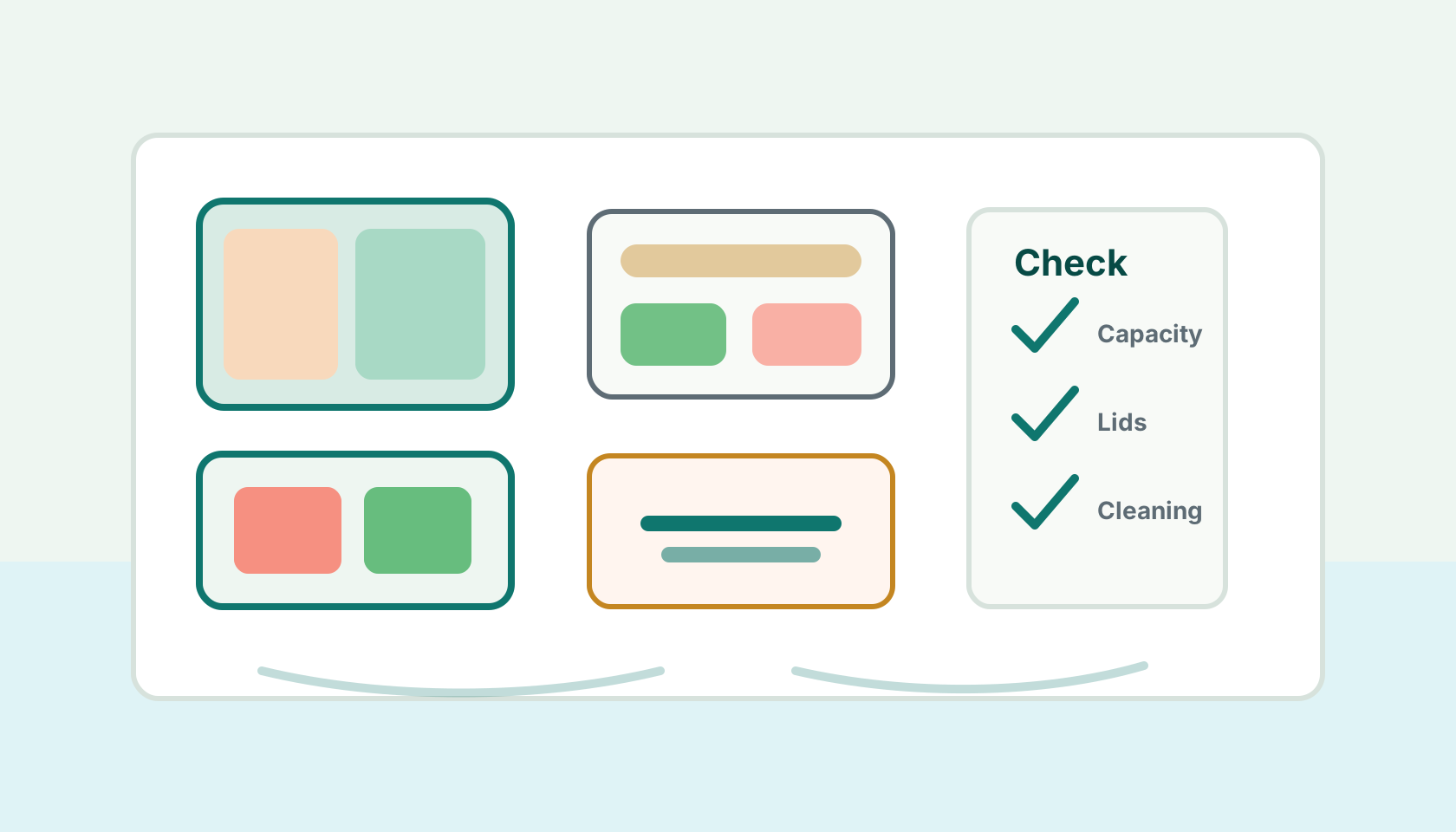
Look for concrete product details before marketing language. A good listing should make it easy to understand capacity, material, lid design, cleaning instructions, and storage footprint.
- Capacity range: Mixed sizes are often more practical than a set of identical containers, especially for leftovers, snacks, and full meals.
- Lid construction: Locking tabs, replaceable seals, and clear care instructions matter more than vague "leakproof" claims.
- Usable shape: Rectangular containers usually stack more efficiently than round containers, but round containers can work well for soups and sauces.
- Cleaning friction: Grooved lids, fixed dividers, and soft gaskets can trap food. If cleaning is a chore, the set is less likely to support a routine.
- Storage footprint: Consider where the containers and lids will live when they are empty, not only how they look in product photos.
- Replacement parts: A durable base is less useful if one broken lid makes the container hard to use.
Glass vs plastic is a tradeoff, not a moral choice
Glass can be a strong fit for home reheating, stain resistance, and visibility in the refrigerator. Plastic can be a better fit for lighter bags, lower upfront cost, kids' lunches, and situations where breakage would be a problem.
Check the manufacturer's instructions instead of relying on assumptions. Some bases are microwave-safe while lids are not. Some items are dishwasher-safe only on the top rack. Some containers are described as freezer-safe but still need room for food expansion.
Weight-loss claim red flags
Meal prep containers are routine tools, not body-result products. Be cautious when a listing claims the container set will make weight loss automatic, uses before-and-after language, shames appetite, or treats strict portion control as the only responsible way to eat.
If a container is bundled with supplements, detox products, appetite-suppression products, stimulant products, patches, or GLP-1 alternative claims, pause. Those categories require warning-first review and should not be treated as ordinary routine-support purchases.
When a portion-control container guide is a better fit
If you are specifically comparing color-coded or portion-labeled systems, read the portion-control container guide. Those products need extra scrutiny because the marketing often blends practical storage with diet rules and body-result promises.
For many readers, plain containers are more flexible and less emotionally loaded. You can still use them for planning, leftovers, and packed meals without buying into a rigid system.
When to skip the purchase
Skip new containers if you already own enough containers that fit the job, if the set only works with a restrictive meal plan you do not want to follow, or if measuring and pre-packing food has started to feel stressful or punitive.
It is also worth talking with a qualified healthcare professional, registered dietitian, or mental health professional with eating-concern experience if meal planning is tied to anxiety, guilt, binge-restrict cycles, medical nutrition questions, medication concerns, or a history of disordered eating.
Bottom line
The best meal prep containers for weight-loss routine support are practical, boring in the best way, and honest about their limits. Choose for food fit, lid reliability, cleaning, storage, and commute needs. Avoid products that turn a storage box into a weight-loss promise.