GoodWeighFinds is for general information only and is not medical advice. Readers should talk with a qualified healthcare professional before starting weight-loss products, supplements, diets, or exercise changes.
Routine-support buying guide
Best Freezer Containers for Batch Cooking Weight-Loss Routines
Freezer containers can make batch cooking less fragile: food is easier to store, label, thaw, and reheat when the container fits the job. They do not make a meal plan medically right for you, create weight loss, or prove that a portion size is appropriate. The useful question is whether they reduce planning friction without turning meals into a rigid rule system.
Who this guide is for
This guide is for adults who batch cook soups, sauces, grains, proteins, or full meals and want containers that survive freezer storage without leaks, clutter, unreadable labels, or awkward thawing. It is a practical kitchen-tool guide, not a promise that batch cooking produces a body outcome.
For the broader decision, start with the routine-support tools guide. If you are comparing everyday lunch and fridge storage instead of freezer-specific use, the meal prep container guide covers glass, plastic, divided, and carry-friendly tradeoffs.
Best fit categories, not product rankings
GoodWeighFinds has not tested specific freezer containers hands-on for this page, and this is not a ranked product review. Use these best-fit categories to compare listings while ignoring weight-loss promises, exaggerated convenience claims, and polished freezer photos that do not show real dimensions.
- Best for stacked freezer drawers: Rectangular, flat-lid containers with repeatable sizes and clear capacity labels.
- Best for soups and sauces: Containers with secure lids, enough headspace for expansion, and shapes that make thawing practical.
- Best for single portions: Smaller containers that help separate meals without forcing a restrictive portion target.
- Best for family batches: Larger containers that hold shared meals and avoid turning batch cooking into many tiny cleanup tasks.
- Best for low-friction labeling: Containers with lids or sides that work well with freezer tape, removable labels, or erasable date markers.
Selection criteria that actually matter
A freezer container has to work when it is cold, full, stacked, and being handled quickly. Compare the practical details before buying a large set.
- Freezer-use labeling: Check the manufacturer's stated freezer guidance instead of assuming every food container handles low temperatures well.
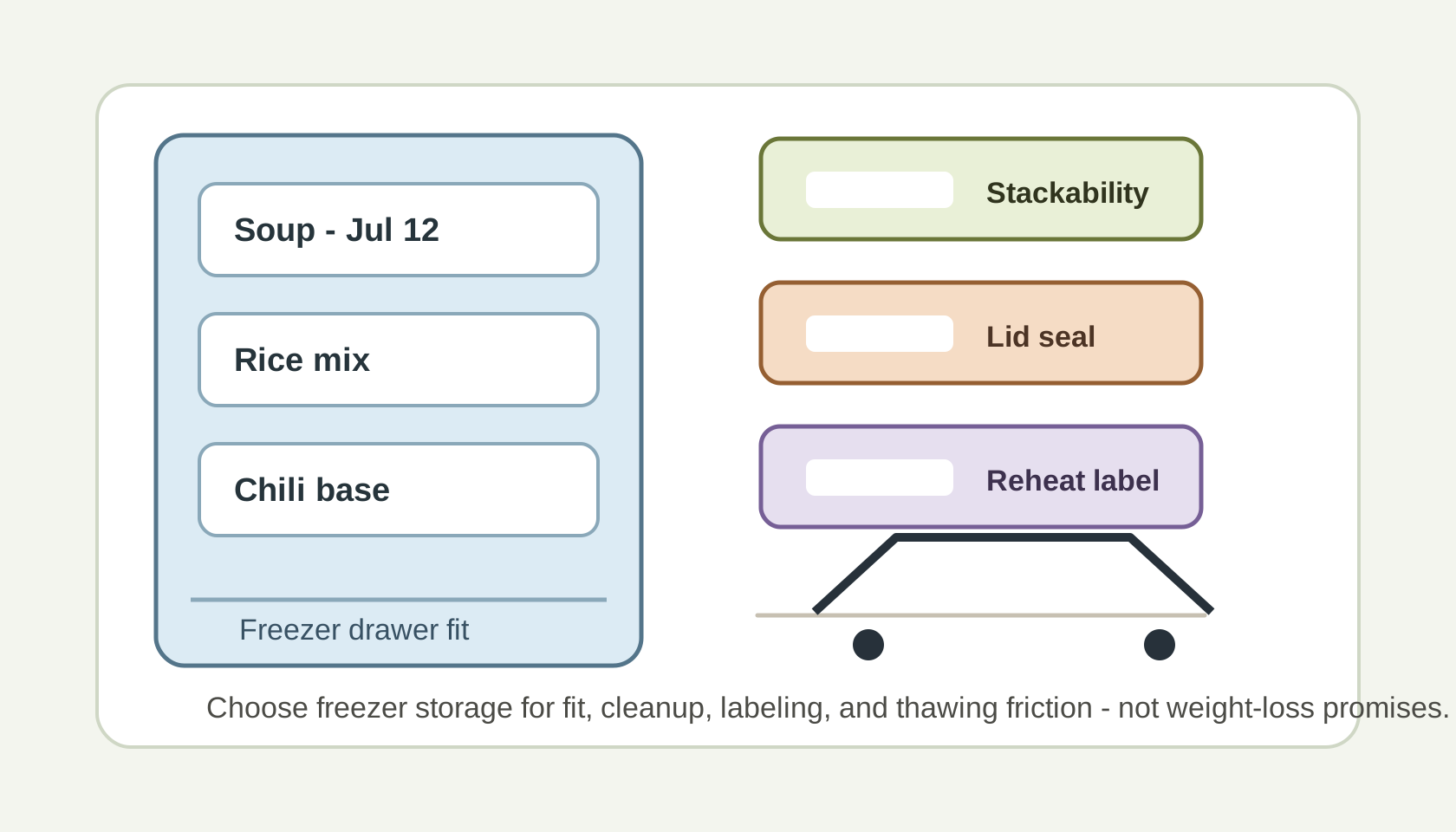
- Stackability: Flat lids and consistent sizes usually matter more than decorative shapes when freezer space is tight.
- Expansion room: Liquids need headspace. A container that encourages overfilling can create leaks, bulging lids, or cracked material.
- Lid seal and care: Look for clear lid instructions, gasket cleaning guidance, and whether replacement lids are available.
- Thawing and reheating limits: Some containers are freezer-safe but not microwave-safe; some lids need to be removed before reheating.
- Label compatibility: Smooth label zones, light-colored lids, or writable surfaces make dates and contents easier to read.
- Storage when empty: Nesting bases and organized lids matter if the set will crowd cabinets between batch-cooking days.
Comparison framework
Before choosing a set, picture one normal batch-cooking week instead of an idealized product photo. A good container should make the whole cycle easier: fill, freeze, find, thaw, reheat, clean, and store.
- Will the container fit your freezer shelf or drawer when stacked with other food?
- Can you read the contents and date without opening every lid?
- Does the listing explain freezer, dishwasher, microwave, and lid restrictions clearly?
- Will the shape work for the foods you actually freeze, not just dry meal-prep photos?
- Can you clean the lid, seal, corners, and label residue without extra hassle?
- Would the set still be useful if it had no effect on body weight at all?
Glass, plastic, and silicone tradeoffs
Glass can be useful for visibility, stain resistance, and reheating when the manufacturer allows it, but it is heavier and can be vulnerable to thermal shock if handled carelessly. Plastic is lighter and often cheaper, but it can stain, warp, or hold odors depending on the product and care instructions. Silicone bags and containers can save space, but they may be harder to dry, label, or stand upright.
None of these materials is automatically the "healthy" choice for every reader. Choose based on the manufacturer's use limits, your freezer space, your cleanup tolerance, your budget, and whether the container fits the foods you already make.
Food-safety wording should stay cautious
Freezer containers can help with organization, but they do not make food safe by themselves. Food safety depends on ingredients, cooling time, freezer temperature, storage time, thawing, reheating, and who will be eating the food.
Use current public-health food-safety guidance for storage and reheating questions instead of relying on a seller's shortcut language. If you are cooking for someone who is pregnant, immunocompromised, older, very young, or otherwise at higher risk, conservative guidance from a qualified source matters more than a container claim.
Weight-loss claim red flags
Batch cooking can support planning, but a freezer container cannot guarantee fat loss, appetite control, calorie control, or "no excuses" discipline. Slow down when a listing uses before-and-after language, rigid diet-plan claims, detox phrasing, moral language about food, or promises that the container set will make weight loss automatic.
Also be cautious with bundles that include supplements, stimulant products, detox teas, appetite-suppression products, patches, or GLP-1 alternative language. Those categories need warning-first review and should not be treated as ordinary kitchen accessories.
Who should skip this purchase
Skip new freezer containers if your current containers, jars, freezer bags, or masking-tape labeling system already work well. Also skip sets that only fit a restrictive meal plan you do not want to follow, or that would add clutter without solving a real storage problem.
If batch cooking, labeling, or portioning food makes eating feel stressful, punitive, or tied to unsafe restriction, a qualified healthcare professional, registered dietitian, or mental health professional with eating-concern experience is a better next step than another product.
Bottom line
The best freezer containers for batch cooking are practical before they are polished: freezer-labeled, stackable, readable, cleanable, and honest about reheating limits. Buy for freezer fit and routine friction. Do not buy a storage container because it promises weight-loss results.