GoodWeighFinds is for general information only and is not medical advice. Readers should talk with a qualified healthcare professional before starting weight-loss products, supplements, diets, or exercise changes.
Buying guide
Best Small Walking Pads for Apartments and Shared Spaces
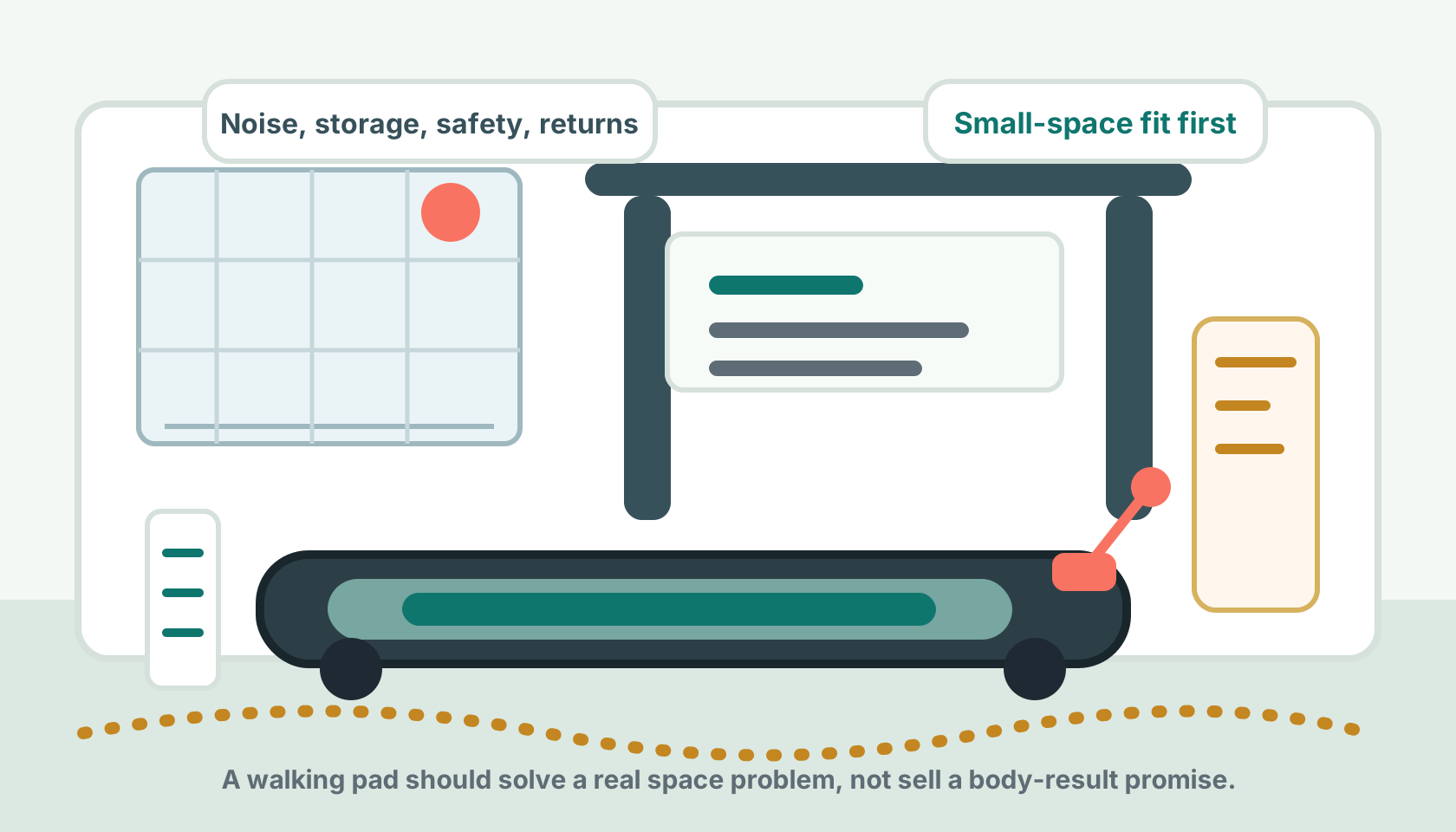
A small walking pad can make indoor movement easier when weather, space, privacy, or schedules get in the way. It can also become a loud, awkward, hard-to-return object under the couch. The useful question is not which model promises the biggest transformation. It is which style fits your room, floor, storage spot, noise limits, and comfort level.
Who this guide is for
This guide is for adults comparing compact walking pads for apartments, shared homes, dorm-style rooms, upstairs spaces, or work areas where storage and noise matter. It is not a ranked review list, and GoodWeighFinds has not tested specific walking pads hands-on for this page.
For the broader buying checklist, start with the walking pad buying guide. If you are comparing lower-risk routine tools across categories, the routine-support tools guide gives the wider framework.
Best fit categories, not product rankings
Use these categories to sort product pages by fit. A walking pad does not need weight-loss claims, calorie-burn promises, or before-and-after language to be worth considering.
- Best for under-desk use: A flat walking pad with smooth low-speed control, reachable controls, and enough deck length to avoid clipped steps.
- Best for tight storage: A lower-profile unit with clear stored dimensions, front wheels, and a realistic place to live when not in use.
- Best for shared walls or upstairs rooms: A model with conservative noise expectations, a clear return policy, and space for a protective mat if your floor allows it.
- Best for nervous beginners: A walking pad with simple controls, a visible stop function, and optional handrail support if balance is a concern.
- Best for budget caution: A model with understandable warranty terms, replacement-part information, and return shipping details before you buy.
Selection criteria for small spaces
Small-space shopping punishes vague listings. Product photos rarely show how much room you need to step on, step off, turn around, store the cord, and move the unit without scraping furniture.
- Stored dimensions: Check folded or flat height, length, and width against the exact closet, bed, sofa, or wall space you plan to use.
- Machine weight: "Portable" can still mean heavy. Compare product weight, wheel placement, and whether you will realistically move it alone.
- Deck size: A compact frame is not helpful if the walking belt is too short or narrow for your natural stride.
- Speed range: For small rooms and desk use, smooth low-speed walking is usually more useful than a high top speed.
- User weight limit: Treat the listed capacity as a fit boundary, not proof of durability. Leave room between the stated limit and intended use when possible.
- Controls and safety key: You should be able to stop the machine quickly without hunting for a remote that fell behind a chair.
Noise claims need a reality check
Many listings call walking pads quiet. Quiet for whom? A first-floor garage, a concrete apartment, an upstairs bedroom, and a shared office can all make the same motor and footfall sound different. Vibration can bother neighbors even when the machine sounds acceptable to the person using it.
Before buying, look for return terms, restocking fees, return shipping rules, and packaging requirements. A walking pad is large enough that a bad fit can be expensive to send back. If a listing leans on "whisper quiet" language but hides return details, slow down.
Comparison framework
Compare each option with a plain yes, no, or maybe. The best small walking pad is the one that removes friction without adding pressure, noise conflict, or safety concerns.
- Will the walking belt fit your stride, not just your floor plan?
- Can you store it without moving three other things first?
- Can you stop it quickly if you feel unsteady?
- Does the speed range support slow walking in a small room?
- Does the listing give real dimensions, weight, capacity, warranty, and return information?
- Would this still be useful if it caused no body change at all?
Claims and bundles to avoid
Be skeptical of product pages that promise fast fat loss, dramatic calorie burn, effortless transformation, or results from short casual walking sessions. A walking pad can support a movement routine. It cannot guarantee weight loss, diagnose health, or make exercise safe for every person.
Also avoid bundles that pair walking pads with detox products, stimulant supplements, appetite-control products, patches, GLP-1 alternative language, or meal-replacement claims. Those are higher-risk categories that need warning-first review, not a casual add-on to equipment shopping.
Who should skip a small walking pad
Skip the purchase if you have no realistic storage spot, if noise could create conflict you cannot test or return around, or if the device would become a punishment tool instead of a convenience tool. A no-cost walking route, standing breaks, a basic step counter, or comfortable walking shoes may be a better first experiment.
Talk with a qualified healthcare professional before starting if you have balance concerns, dizziness, chest symptoms, joint pain, recent injuries, pregnancy-related concerns, or a medical condition that affects exercise tolerance. A product page cannot personalize exercise advice.
Bottom line
The best small walking pad for an apartment or shared space is usually the least dramatic one: clear dimensions, manageable weight, enough deck room, simple controls, realistic noise expectations, and return terms you understand. Buy for room fit and repeatable use, not for body-result promises.